

.png?height=200&name=Sterile%20Processing%20(6).png)
A sterile processing system is the integrated workflow of people, equipment, and protocols that...
Surveyors rarely open a binder first. They look at shelves, sinks, carts and counters, and the same handful of issues surfaces department after department.
Surgical Solutions spent Sterile Processing Week running Spot the Gap, a daily challenge asking sterile processing professionals to find survey findings hiding in photos taken inside working departments. Sharp eyes turned up nearly all of them. Here is the full set, grouped by where each one lives rather than by the day it ran.
Sterile Storage
Supply rooms absorb much of the quiet sterile processing work, and surveyors tend to linger there.
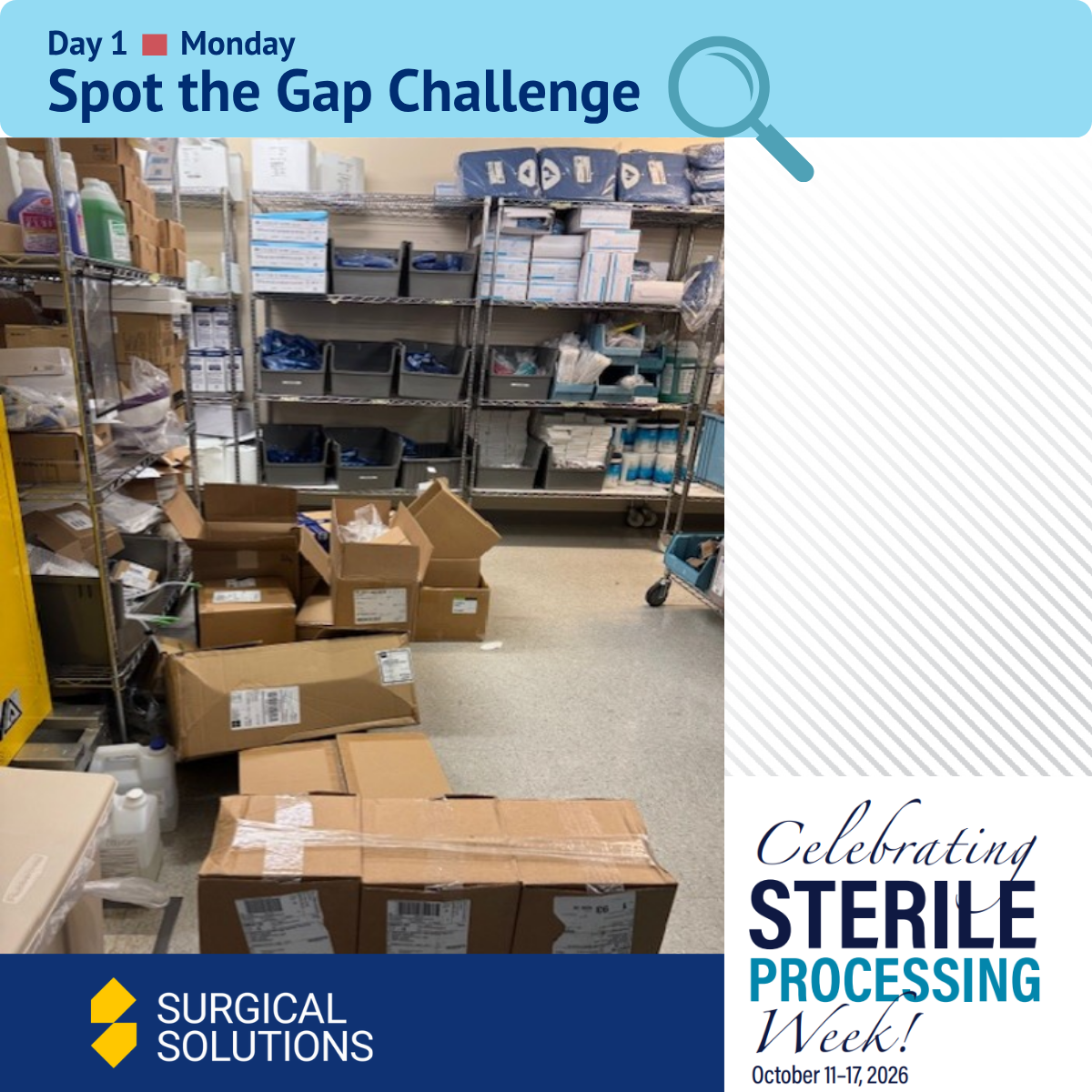
Can cardboard shipping boxes be stored in sterile storage?
No. External shipping cartons travel through warehouses, trucks and loading docks, collecting dust and debris along the way. Supplies come out of outer cartons before reaching the shelves, and the cardboard stays out of the storage area entirely.
The fix takes a defined break-out point outside sterile storage where staff remove outer packaging. Departments without a dedicated space tend to default to opening boxes on the shelf, which puts the carton in the room by habit rather than by decision.
Where should liquids be stored in a sterile supply room?
On the bottom shelf, below sterile supplies. A leak, a spill or a cracked container on an upper shelf runs down onto everything stored beneath it, and sterile packaging offers no protection against saturation. Bottom-shelf placement contains the damage to the floor.
This one is easy to reverse without noticing. Restocking under time pressure puts product wherever space allows, and a single misplaced case of irrigation fluid is enough to draw a finding.
The Soiled Utility Room
The soiled utility room sits between the procedure and the department, which makes it the easiest room to treat as a hallway.
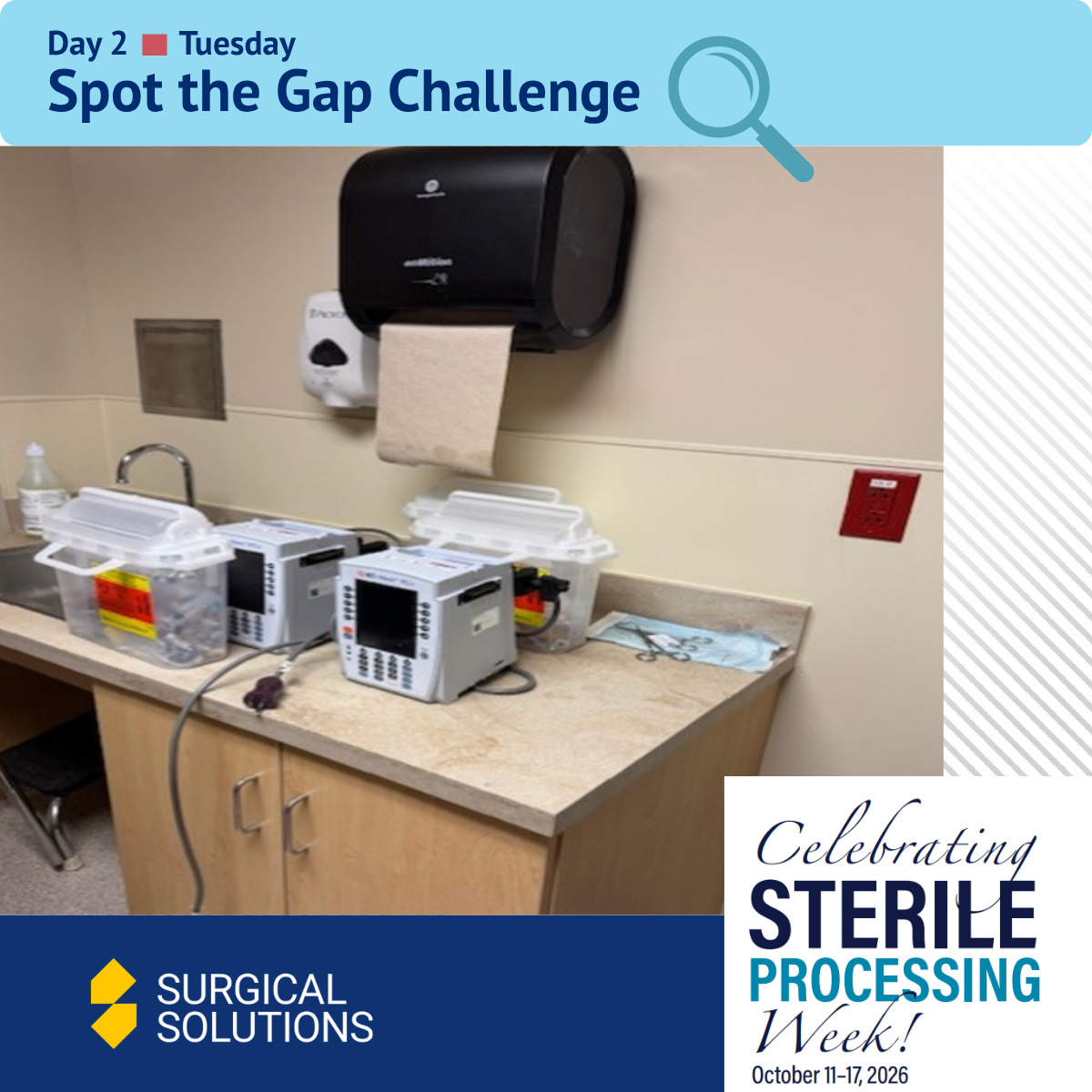
How should dirty instruments be held before transport to decontamination?
In a closed, labeled container designated for soiled transport. Instruments left on a counter create an open contamination source in a room staff pass through constantly, and nothing about the arrangement signals that the items are dirty.
Surveyors read counter-staged instruments as a process gap rather than a one-time lapse, because containers either exist and get used or sit empty somewhere else in the room.
What happens when sharps containers sit full?
Full sharps containers waiting on pickup are a safety exposure and a visible sign that disposal is running behind schedule. Overfilled containers make safe disposal harder for the next person and defeat the engineering control the container is supposed to provide.
Two full containers in one room points at the pickup cadence, not at the staff using them.
Where do IV pumps belong between cases?
In a designated pickup location, plugged in, waiting on cleaning and recharge. Equipment parked in soiled utility and left unplugged drains, delays the next case and blurs the line between soiled and ready-for-service.
A labeled spot with available outlets resolves most of this. Pumps accumulate wherever the path of least resistance takes them.
Before the Washer
Some gaps only become visible after the fact, on the clean side, where the evidence is a container that should have been prepped differently.
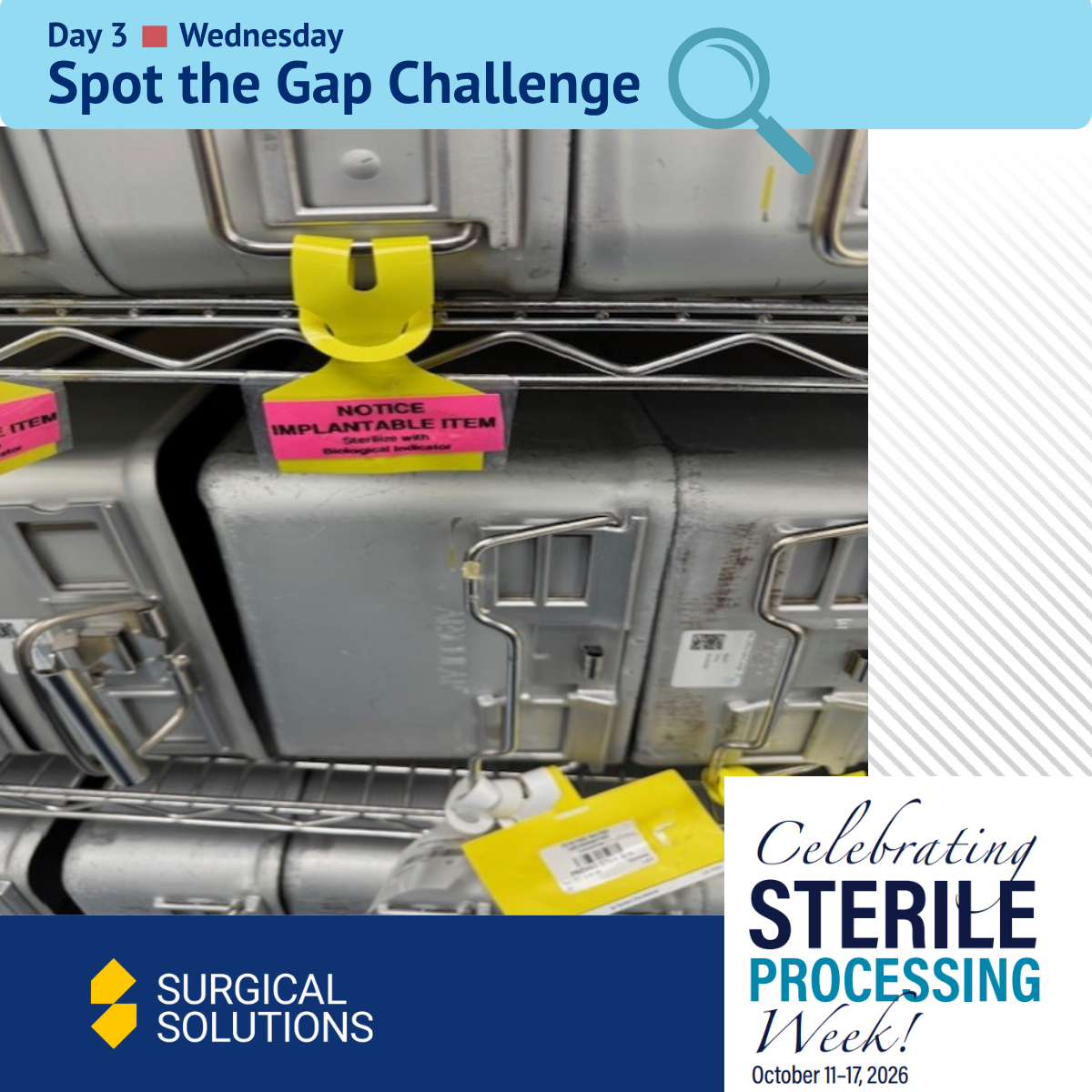
Should labels be removed from container handles before washing?
Yes, and the step belongs in decontamination, not after the cycle. Labels break down under the heat, pressure and chemistry of a wash cycle. The residue works its way into washer components and leaves adhesive and paper fragments on container handles and latches.
Those remnants give soil and moisture somewhere to collect in a spot routine cleaning does not reach well. Single-use labels also lose integrity in the wash, so nothing is salvaged by leaving them on.
A container arriving clean with label residue still attached tells a surveyor the removal step is not reliably happening, even when the rest of the cycle documentation looks complete.
The Decontam Sink
Manual cleaning depends on conditions staff can verify rather than estimate, and the sink is where that gets proven.
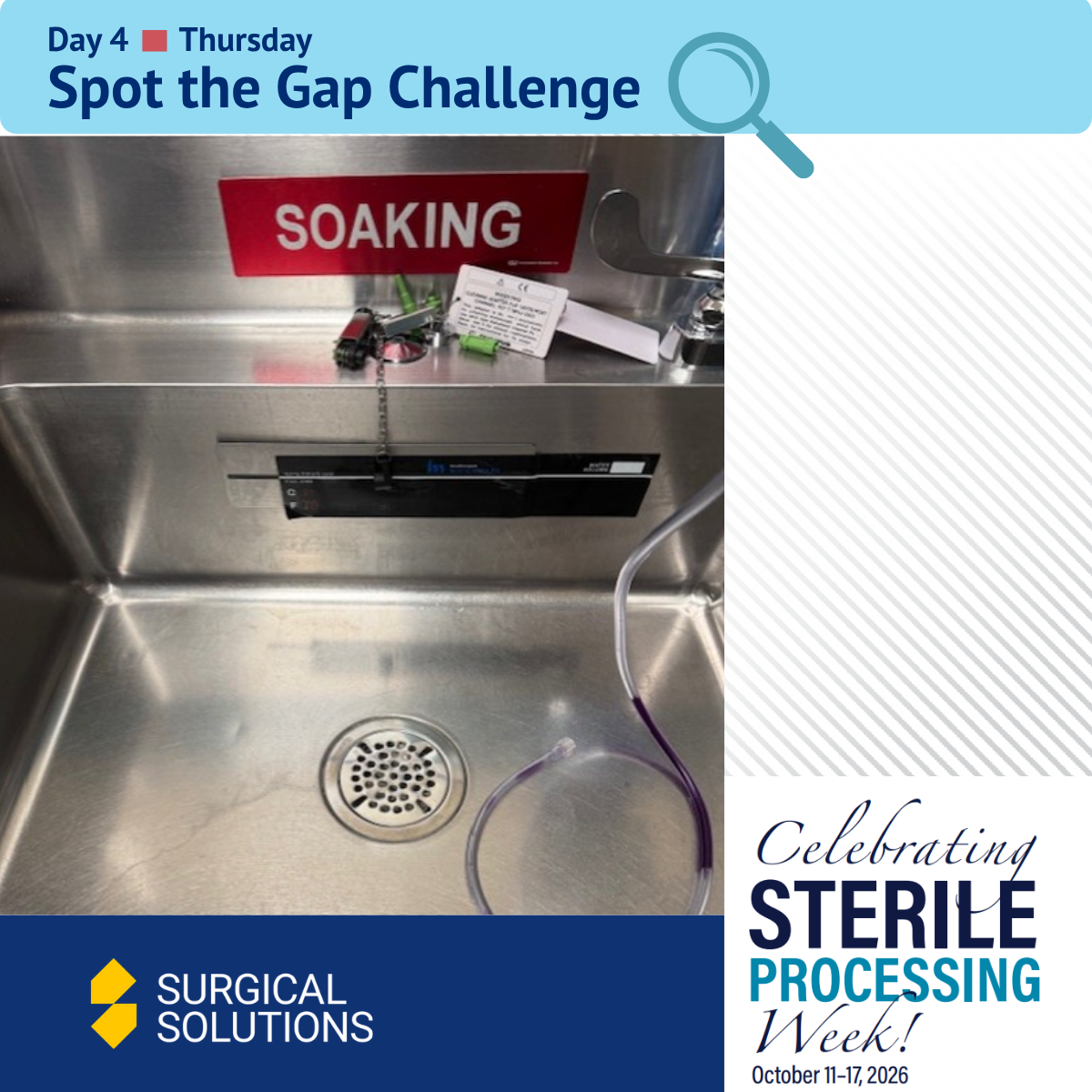
How is water temperature verified at a decontamination sink?
With a thermometer or temperature indicator at the sink, checked and documented before cleaning begins. Water that runs too cool leaves protein soil in place. Water that runs too hot can set it. Neither outcome is visible to the person standing at the sink.
A marked fill line serves the same purpose for dilution. Detergent concentration depends on a known volume of water, and a sink without a fill line turns every dilution into an estimate. Both marks together let any staff member reproduce the same conditions on any shift.
Does peeling signage matter in decontamination?
More than it looks like it should. A deteriorating sticker or sign creates lifted edges and gaps against the surface beneath, which hold moisture and resist cleaning.
The second problem is informational. Signage at a sink usually carries dilution ratios, soak times or temperature ranges, and a label degraded past legibility stops doing the job it was posted to do. Replacement is inexpensive and the finding is avoidable.
Scope Storage
Flexible endoscopes are among the most delicate and most expensive devices in the department, and storage is where avoidable damage happens.
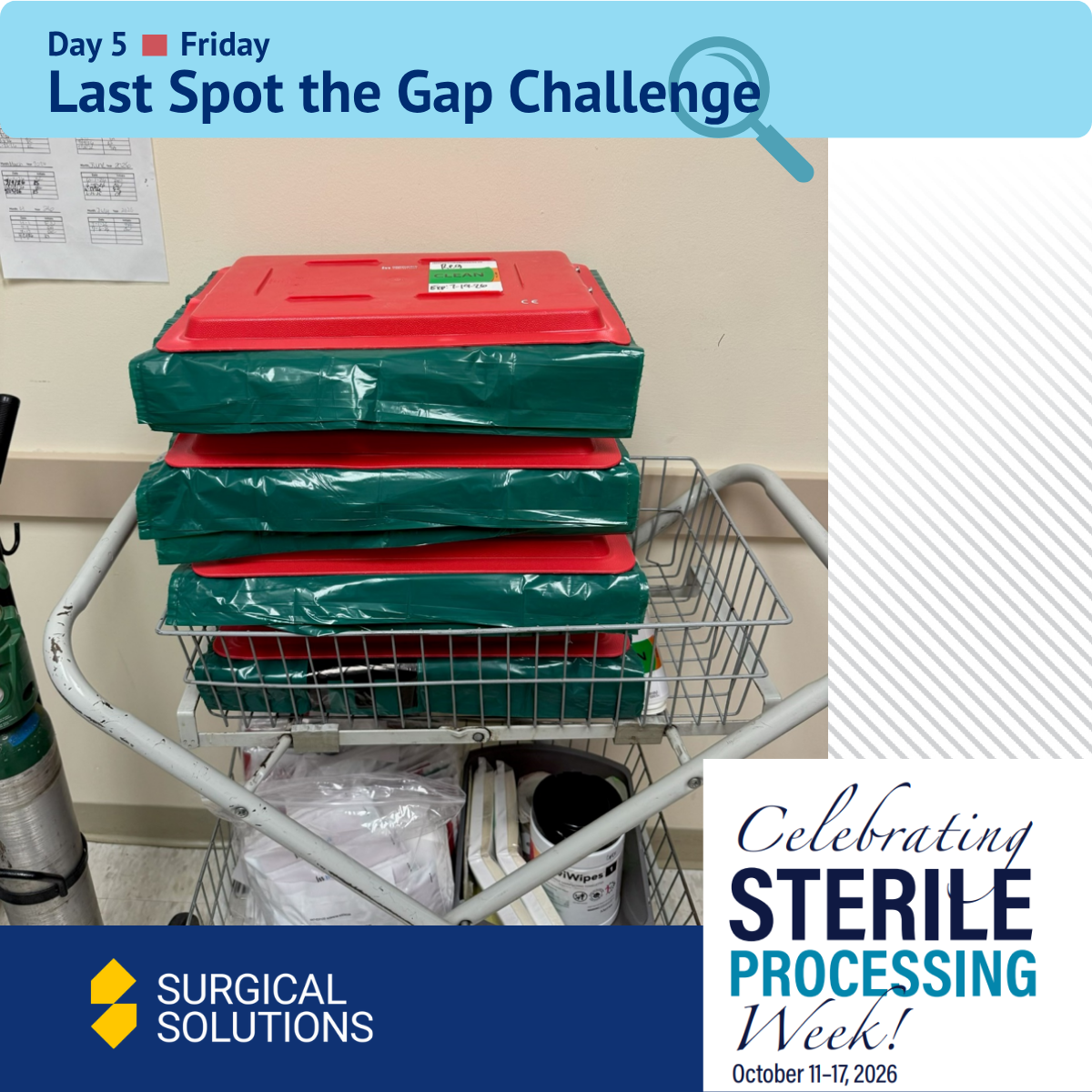
Can flexible scopes be stacked in storage?
No. Stacking puts weight on insertion tubes and control bodies and introduces tight bends in components built to tolerate gentle curves. Damage from stacking is often internal, which means a channel breach can go undetected until leak testing catches it, or until it does not.
A stack is also unstable. One bump sends several devices to the floor at once, turning a storage habit into a multi-device repair invoice.
Scopes hang vertically, uncoiled, without touching one another, with caps and valves handled per manufacturer instructions.
Does cart and shelving condition matter in storage?
Yes. Rust or compromised finish on a cart or shelf means the surface can no longer be reliably cleaned and disinfected, and corrosion produces particulate in a space holding processed devices.
Rust is a repair-or-replace item, not a cleaning item. Once the protective surface fails, scrubbing accelerates the problem rather than fixing it.
Every one of these is fixable
None of the 10 gaps above requires capital investment or a staffing change. Each comes down to a defined step, a designated place or a replacement part, and sterile processing teams correct issues like these every day, long before a surveyor walks through the door.
The harder question is whether the corrections hold under pressure. Gaps reappear during high volume, short staffing and fast turnover, which is exactly when a survey is most likely to find them.
Seeing the department the way a surveyor sees it is the fastest way to know. The Accreditation 360 virtual tracer follows one instrument tray through six stops, from point of use to sterile storage, and shows where a surveyor would press.
Take the Accreditation 360 virtual tracer