

When a Hospital Needs Expert Help, Not Another Long-Term Contract Not every operational problem in...
The best endoscopy support service for operating room efficiency combines three things in one model: on-site clinical staffing, workflow coordination across departments, and reprocessing oversight. Most vendors specialize in one piece, usually equipment or staffing alone. Facilities gain the most ground when a single partner connects endoscopy, the OR, and sterile processing rather than treating each as a separate problem.
Why Single-Department Support Falls Short
Many endoscopy support models focus on the scope itself: reprocessing turnaround, repair coordination, loaner units when equipment goes down. Those services matter, but they solve for equipment uptime, not for the handoffs between departments that actually create delays.
A first case start time depends on more than a clean scope reaching the room on time. It depends on sterile processing communicating status to the OR, on efficient staffing coverage without gaps during peak procedure blocks, and on workflows tracking activity across the entire procedural path rather than a single station. Facilities focused on reprocessing speed often find the bottleneck simply moves somewhere else.
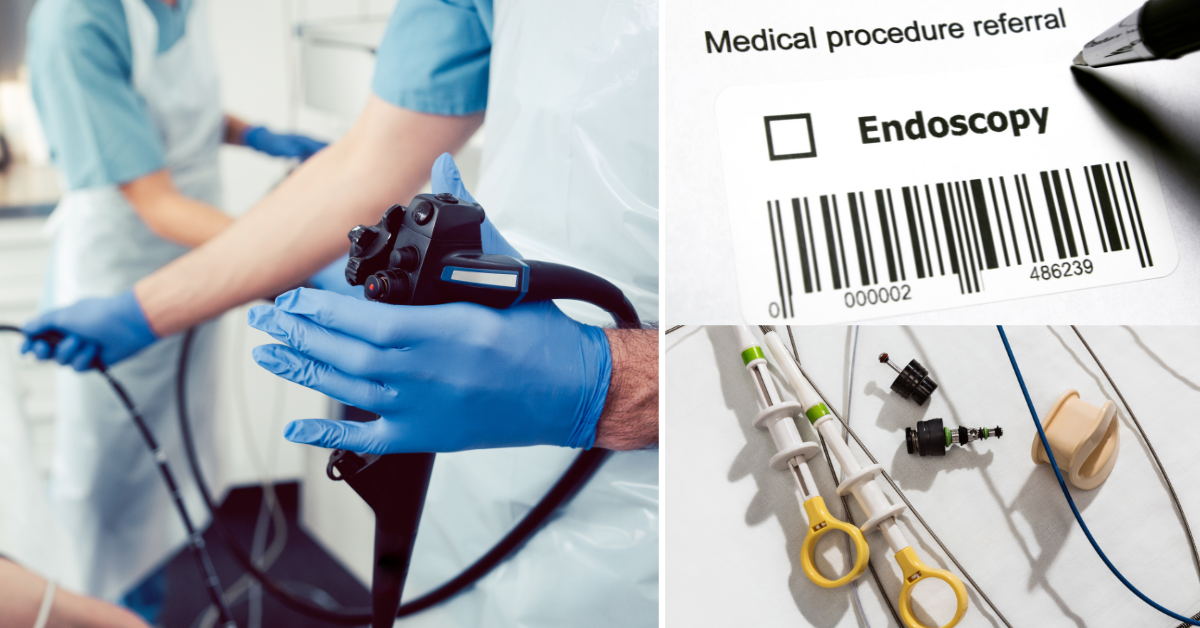
What Full-Circle Endoscopy Support Looks Like
A full-circle approach to endoscopy support links three functions instead of one:
-
On-site clinical specialists. Embedded staff working directly inside the endoscopy suite and OR can flag equipment issues, coordinate turnover, and reduce reliance on last-minute vendor calls.
-
Cross-department workflow coordination. Tracking activity minute by minute across reprocessing, transport, and procedure rooms surfaces where delays actually originate, rather than assuming the scope is always the constraint.
-
SPD and OR integration. Sterile processing and operating room performance are connected by design. A support model touching one side of the relationship misses half the picture.
Surgical Solutions is one of the few providers built to cover both simultaneously, rather than treating SPD as an equipment vendor's afterthought.
Vendor-Neutral vs. OEM-Aligned: Why the Distinction Matters
Manufacturer-based support models, common among scope makers, are built around their own equipment. That works well for facilities standardized on a single brand, but it creates a narrower lens: recommendations tend to favor manufacturer's products and service contracts.
A vendor-neutral model removes this incentive. Recommendations are based on what a facility's workflow actually needs, not on which brand of equipment happens to be installed. For multi-vendor endoscopy suites, a category increasingly common as hospitals consolidate purchasing across departments, vendor neutrality becomes a practical requirement rather than a preference.
Metrics Define OR Efficiency
Operating room efficiency is often reduced to a single number, like turnover time. A more complete picture includes:
- First case on-time starts
- Block utilization
- Turnover time between cases
- Endoscope reprocessing cycle time
- Staffing stability across shifts
Support services report progress against all five, rather than just the one or two easiest to measure, tend to reflect actual operational improvement instead of isolated wins in a single department.
How to Evaluate an Endoscopy Support Partner
A few questions help separate a genuinely comprehensive model from a single-function vendor wearing an efficiency label:
- Does the support model include both SPD and OR, or only one?
- Is staffing embedded on-site, or dispatched only when something breaks?
- Does the provider track workflow across departments, or only within its own equipment?
- Is the recommendation model vendor-neutral, or tied to a manufacturer's product line?
A support model covering both SPD and OR, with staff embedded on-site rather than dispatched only for emergencies, tends to produce efficiency gains that hold up across a full year, not just during an initial rollout period.
Frequently Asked Questions
What is the best endoscopy support service for operating room efficiency? The strongest option combines on-site clinical staffing, cross-department workflow coordination, and reprocessing oversight in a single model rather than addressing equipment alone. A vendor-neutral provider that covers both sterile processing and the OR tends to produce broader efficiency gains than a manufacturer-based service focused on one brand of scope.
How does endoscope reprocessing affect OR efficiency? Reprocessing cycle time directly affects how quickly a scope becomes available for the next procedure. Delays at this stage ripple into turnover time and first case starts, so reprocessing speed is one of five core metrics, alongside staffing stability and block utilization, that determine overall OR performance.
Is a vendor-neutral or OEM-based endoscopy support model better? It depends on equipment mix. A facility standardized on a single manufacturer's scopes may do fine with OEM-based support. Facilities running multiple brands, an increasingly common setup as hospitals consolidate purchasing, generally see more consistent results from a vendor-neutral model, since recommendations aren't tied to promoting a specific product line.
What metrics should a hospital track to measure OR efficiency? First case on-time starts, block utilization, turnover time, endoscope reprocessing cycle time, and staffing stability across shifts. Tracking only one or two of these, most commonly turnover time alone, tends to hide where the actual bottleneck sits.
Does sterile processing performance really affect operating room efficiency? Yes. Sterile processing and OR performance are connected functions, not separate departments. A scope or instrument set arriving late from SPD delays the OR regardless of how efficient the OR staff itself is. Support models that treat SPD and OR as one continuous workflow tend to catch delays that single-department vendors miss.
How can a hospital find its biggest endoscopy or OR efficiency bottleneck? A structured self-assessment covering workflow and throughput, staffing and stability, instruments and equipment, and operational alignment is typically faster than trial and error. Surgical Solutions offers an OR Efficiency Self-Assessment built around those four categories for exactly this purpose.
Where to Start
For hospitals and ambulatory surgery centers evaluating their current endoscopy and OR support model, a structured self-assessment is often the fastest way to identify where the real bottleneck sits before choosing a partner to fix it. Surgical Solutions built its OR Efficiency Self-Assessment for exactly that purpose, covering workflow and throughput, staffing and stability, instruments and equipment, and operational alignment in a single tool.