



In honor of International Infection Prevention Week (October 19–25, 2025) Behind every safe surgery...
Every year, hospital endoscopy departments are asked to do more with less. Procedure volumes are climbing. Reprocessing standards are tightening. And the technicians qualified to meet those standards are harder than ever to find and keep.
For surgical services leaders, that combination creates a real decision point: continue building internal capacity, or explore whether outsourced endoscopy support is the right fit for your facility.
This guide walks through the key factors to consider when evaluating outsourced endoscopy support models, from staffing depth and IFU compliance to workflow integration and measurable outcomes. Whether you are exploring external support for the first time or reassessing your current model, the frameworks here are designed to help you ask better questions and make a more informed decision.
Key Takeaways: Outsourced Endoscopy Support for Hospitals in 2026
- Staffing instability is one of the most common drivers behind outsourcing decisions and one of the clearest problems a dedicated partner can solve.
- IFU compliance is non-negotiable. Any endoscopy support partner should demonstrate documented adherence to manufacturer reprocessing instructions, not just claim it.
- Outsourced support works best when it integrates with existing SPD and OR teams rather than operating as a disconnected vendor.
- Staff turnover within the outsourcing partner matters as much as your own. High internal turnover defeats the purpose of seeking stability.
- The right partnership should deliver measurable outcomes: reduced scope repairs, improved turnaround times, and stronger accreditation readiness.
- Mock surveys and gap assessments are hallmarks of a proactive partner, not bonus features.
What Is Outsourced Endoscopy Support?
Outsourced endoscopy support refers to partnering with an external organization to manage some or all aspects of your endoscopy operations. This can include staffing, scope reprocessing, equipment maintenance, compliance oversight, and workflow coordination.
Unlike traditional staffing agencies that place temporary workers, dedicated endoscopy support partners embed teams within your hospital. These professionals work alongside your existing staff, learn your workflows, and become part of your culture.
The scope of services varies by provider. Some focus narrowly on reprocessing tasks, while others offer full-service operational support spanning pre-procedure preparation, post-procedure care, and instrument handling.
Why Are Hospitals Turning to Outsourced Endoscopy Models?
Several converging factors are driving hospital surgical leaders toward outsourced endoscopy solutions. Understanding these drivers can help you determine whether external support makes sense for your facility.
Staffing Shortages and High Turnover
The sterile processing and endoscopy workforce faces significant recruitment and retention challenges. According to industry data, turnover rates in sterile processing departments frequently exceed 30 percent annually. This instability creates coverage gaps, training burdens, and inconsistent quality.
Many hospitals rely on travel staff to fill these gaps. However, short contracts of 9 to 13 weeks often introduce new problems: inconsistent practices, limited specialty training, and constant onboarding cycles that drain manager time.
Increasingly Complex Compliance Requirements
Endoscope reprocessing guidelines from organizations like ASGE and the CDC continue to evolve. Following Instructions for Use (IFU) from each endoscope manufacturer is required, and deviations can result in patient safety incidents and accreditation findings.
A recent study examining endoscopy centers found evidence of non-compliance in real-world reprocessing practices, particularly in the cleaning of unbrushable endoscope channels. This finding underscores the challenge of maintaining rigorous standards without dedicated expertise.
Rising Procedure Volumes
Demand for GI endoscopy procedures continues to grow as colorectal cancer screening expands and minimally invasive techniques become standard for more conditions. Your endoscopy suite may be asked to handle more cases without proportional increases in staffing or resources.
How to Evaluate Outsourced Endoscopy Support Models
Not all outsourced endoscopy providers are the same. The evaluation framework below will help you assess potential partners against the criteria that matter most for your hospital's success.
-
Staffing Depth and Credential Requirements. Start by examining the qualifications and certifications of the team that would work in your facility. Look for providers who employ CRCST (Certified Registered Central Service Technician) certified professionals with specific endoscopy experience. Questions to ask:
-
Ask about the provider's turnover rate among their own staff. High turnover within the outsourcing partner defeats the purpose of seeking stability.
-
Also consider the depth of coverage offered. Can the provider support both scheduled and on-call needs? Do they have the bench strength to cover absences without pulling from your core team?
-
-
IFU Compliance and Reprocessing Standards. Compliance with IFU requirements is foundational to any endoscopy support partnership. Your evaluation should include detailed questions about how the provider ensures adherence to manufacturer instructions. Consider this:
-
Request documentation of their compliance monitoring processes.
-
How do they track that each step of reprocessing is completed, and how will you know if it meets specifications?
-
What happens when IFU updates are released?
-
-
Integration with Your SPD and OR Teams. The best outsourced endoscopy support functions as an extension of your team, not a separate silo. Evaluate how the provider approaches integration with your sterile processing department and surgical services. Cross-departmental alignment between endoscopy, sterile processing, and vendors improves communication and accountability. Your partner should demonstrate experience coordinating with hospital leadership and clinical teams to create unified workflows. Ask about their onboarding process:
-
How long does it take to integrate their team with yours?
-
What ongoing coordination mechanisms do they use to stay aligned with your priorities?
-
What Services Should Outsourced Endoscopy Support Include?
A comprehensive outsourced endoscopy partnership extends beyond basic staffing. Here are the service areas to evaluate when comparing potential partners.
-
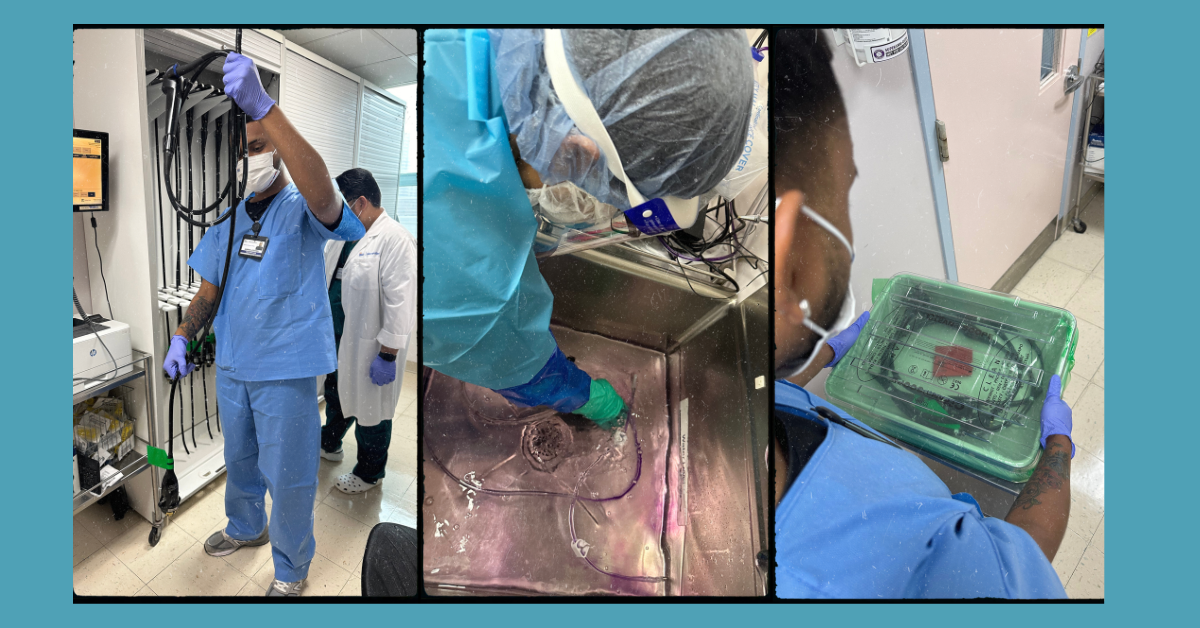
Scope Handling and Reprocessing. The core of endoscopy support involves proper handling of flexible endoscopes throughout their use cycle. This includes bedside pre-cleaning immediately after procedures, manual cleaning at specialized sinks, leak testing, high-level disinfection, and proper drying and storage. Look for a partner that offers white-glove handling and documentation for sensitive scopes, ensuring traceability and proper care at every step. This attention to detail helps reduce scope damage and extends equipment life.
-
Equipment Maintenance and Repair Coordination. Endoscopes are expensive, delicate instruments. Proper maintenance prevents costly repairs and extends useful life. Your outsourced partner should have processes for routine equipment checks and coordination with repair vendors when issues arise. Look for data-driven repair management that identifies root causes and prevents recurring damage. Tracking repair trends can reveal training opportunities or issues to handle before they become expensive patterns.
-
Workflow Optimization. Efficient endoscopy operations depend on smooth coordination between procedure rooms and reprocessing areas. The right partner should bring expertise in workflow design that maximizes scope availability while maintaining quality standards. This includes optimizing scheduling and workflow coordination to reduce downtime between cases. When scopes are ready faster without cutting corners on reprocessing, you can increase throughput without compromising patient safety.
-
Staff Training and Competency Validation. Even with outsourced support, your internal team benefits from training opportunities. The right partner will offer education resources that elevate skills across your endoscopy and sterile processing staff. Look for competency-based education programs that include initial training and ongoing validation. Your partner should support yearly competencies and certification renewals to maintain top standards in infection control.
Surgical Solutions delivers on all four of these service areas through embedded, CRCST-certified teams that work alongside your existing staff. Every current Surgical Solutions partner hospital passed its most recent accreditation surveys with zero deficiencies.
How Does Outsourced Endoscopy Support Affect Accreditation Readiness?
Joint Commission and DNV surveyors pay close attention to endoscope reprocessing practices. An outsourced endoscopy partner should strengthen your accreditation posture, not create additional risk.
Documentation and Audit Trails
Accreditation surveys often focus on documentation. Can you demonstrate that proper reprocessing steps were followed for each scope? Your partner should maintain detailed records that support your compliance story.
This documentation should be readily accessible for survey preparation and actual inspections. The records should show not just that steps were completed but that they were completed correctly and by qualified personnel.
Mock Surveys and Gap Assessments
Proactive accreditation preparation identifies issues before surveyors do. Surgical Solutions delivers mock surveys to prepare hospitals for The Joint Commission and other accrediting bodies, helping you address gaps before they become findings.
Ask potential partners about their experience with accreditation preparation. Can they share examples of how they have helped hospitals improve survey outcomes? What processes do they use to stay current with changing standards?
What Outcomes Should You Expect from Outsourced Endoscopy Support?
Your investment in outsourced support should produce measurable results. Establish baseline metrics before implementation so you can track progress in areas that matter to your organization.
Reduced Scope Repair Costs. Consistent, proper handling reduces scope damage. Track your repair frequency and costs before and after implementing outsourced support. Many hospitals experience significant reductions when trained specialists handle scopes throughout the reprocessing cycle.
Improved Turnaround Times. Faster scope turnaround means better utilization of your endoscopy suite. When scopes move efficiently through reprocessing without quality compromises, you can support more procedures without purchasing additional equipment. Measure your current turnaround times and set improvement targets. Your partner should be able to demonstrate how their processes support faster cycles while maintaining compliance.
Enhanced Staff Satisfaction. Overworked teams experience burnout that affects both retention and quality. Outsourced support should relieve pressure on your existing staff, allowing them to focus on their core responsibilities without constant overtime demands.
Stronger Compliance Metrics. Track your compliance indicators, including IFU adherence rates, documentation completeness, and audit findings. These metrics should improve as your outsourced partner implements structured processes and ongoing monitoring.
On culture fit: This is where the difference between staffing agencies and embedded partners becomes clear. Look for providers who hire locally, build consistent teams, and prioritize long-term relationships over rotating assignments. Your outsourced team should become part of your hospital community, not cycle through it.
On quality control: The right outsourcing relationship increases visibility into quality metrics, not reduces it. Establish clear expectations and monitoring mechanisms in your agreement, and build in regular review meetings so you stay informed and in control of outcomes.
On patient safety: Safety should improve with qualified, well-trained specialists managing endoscopy operations. Select a partner with a demonstrated commitment to infection prevention and IFU compliance, and ask directly about their safety record at other facilities. A trustworthy partner will be transparent.
Outsourced endoscopy support is not a one-size-fits-all decision, but the right partner makes the evaluation straightforward. Surgical Solutions works alongside hospital surgical leaders to assess fit, build embedded teams, and deliver the compliance infrastructure that accreditation surveys demand. Every current Surgical Solutions partner hospital passed its most recent Joint Commission or DNV survey with zero deficiencies, zero findings, and no corrective action required. If your endoscopy department is feeling the pressure, it may be time to explore what a dedicated partner could do for your team.
Contact Surgical Solutions to start the conversation.

FAQs About Outsourced Endoscopy Support for Hospitals in 2026
What is the difference between outsourced endoscopy support and traditional staffing agencies?
Outsourced endoscopy support involves dedicated teams that embed with your hospital long-term, learn your workflows, and maintain consistent quality. Traditional staffing agencies typically place temporary workers on short contracts, leading to constant turnover and training burdens. Surgical Solutions maintains a turnover rate of just 2.6 to 3 percent, compared to industry averages exceeding 30 percent.
How does outsourced endoscopy support help with IFU compliance?
Dedicated endoscopy partners bring specialized training and documented processes for following manufacturer IFU requirements. Surgical Solutions supports ongoing staff education to stay current with evolving reprocessing guidelines and uses systematic tracking to ensure each step is completed correctly for every scope.
Can outsourced endoscopy support reduce scope repair costs?
Yes. Consistent, proper scope handling by trained specialists reduces damage that leads to expensive repairs. Surgical Solutions uses data-driven repair management to identify root causes and prevent recurring problems, helping hospitals reduce equipment maintenance costs.
Will outsourced endoscopy staff integrate with our existing teams?
The best outsourced partners function as extensions of your hospital team rather than separate vendors. Surgical Solutions embeds CRCST-certified professionals who coordinate with your SPD and OR teams to create unified workflows and improve cross-departmental communication.
How does outsourced endoscopy support affect accreditation surveys?
Quality outsourced support strengthens your accreditation posture through documented compliance processes and thorough audit trails. Surgical Solutions delivers mock surveys to help hospitals prepare for The Joint Commission and other accrediting bodies, identifying gaps before they become survey findings.
What outcomes should we track when evaluating outsourced endoscopy support?
Key metrics include scope repair frequency and costs, reprocessing turnaround times, compliance rates, staff satisfaction scores, and accreditation outcomes. Surgical Solutions works with partner hospitals to establish baseline measurements and track improvements over time.